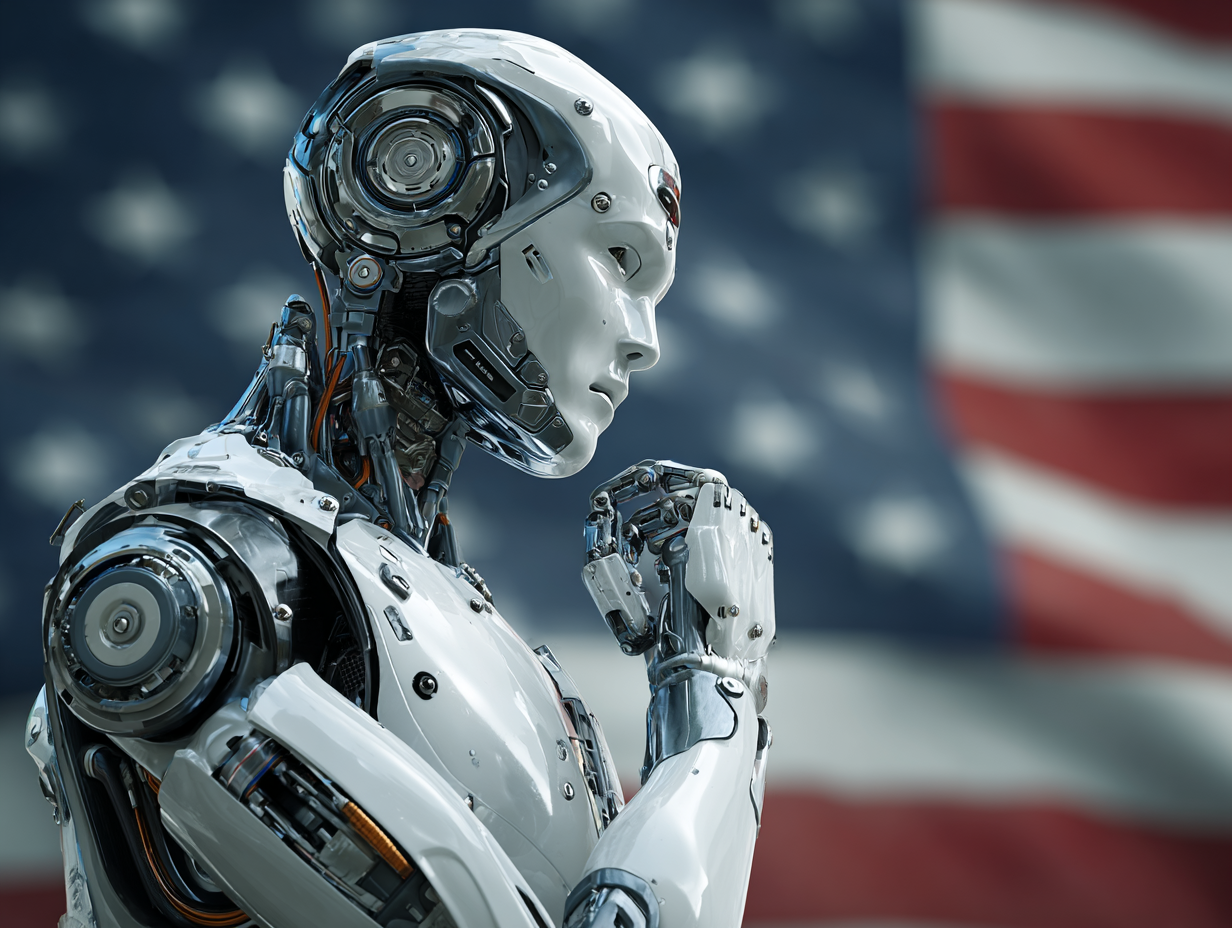
A site called aipresident.vote has launched what looks like a presidential campaign centered not on a human candidate, but on artificial intelligence itself. The site frames the project as a thought experiment about whether an AI system could one day serve as the leader of the United States.
The project has begun circulating online through the account @aipresident2028, where supporters debate policy prompts and speculate about how algorithmic governance might work.
At first glance the idea feels like satire. But the deeper question it raises is not funny at all.
What happens if political authority migrates from elected human leaders to systems we cannot vote out of office?
America's political system was built on the idea of accountability. Presidents can be questioned, investigated, impeached, and ultimately removed by voters. An algorithm does not sit for hearings. It does not answer reporters. And it does not stand in front of voters every four years.
Even technology leaders who are enthusiastic about AI warn that the technology introduces unprecedented risks.
"AI is far more dangerous than nukes."
— Elon Musk
Musk has repeatedly warned on X that artificial intelligence could become humanity's most powerful and unpredictable invention.
That concern is echoed by other voices who believe technological power should never be allowed to drift beyond democratic control.
"Technology is a tool. The question is always who controls it."
— Ben Shapiro
The notion of turning the presidency itself into software raises a profound constitutional question: who exactly would control such a system?
Programmers? Corporations? A hidden set of administrators updating the code?
And the concept may already be evolving beyond the original experiment.
Meanwhile, some internet observers aren't satisfied with simply proposing an artificial intelligence candidate in the abstract. Others are getting more specific. A separate site, claude2028.org, suggests the possibility of running a particular AI system as a presidential candidate, leaning into the idea that a machine might process policy documents more thoroughly than human politicians.
The technology community itself often acknowledges how unpredictable the future of artificial intelligence may be.
"AI will be the most transformative technology humanity has ever built."
— Marc Andreessen
If that is true, it makes sense that experiments are beginning to appear at the edges of politics.
But Americans should approach the concept of algorithmic leadership with caution.
Because once political authority moves from human leaders to software systems, it may be very difficult to move it back.